
EICMA opens in Milan on 3–8 November. Is the self-riding motorcycle a dream, or is the real change happening in the electronics that ride alongside the rider?
Every November the two-wheeler world turns its attention to Milan. EICMA runs for the 83rd time this year, from 3 to 8 November at Fiera Milano Rho. The first two days are for press and trade visitors, and 5–8 November is open to the public. The show grows by one hall this year, to 10.
There will be plenty of talk about new models, colours and engine sizes. But over the last few years the part people are most curious about has changed: the electronics on the bike. Radar, cameras, vehicles that talk to each other. In this piece we wanted to look at one question: will two-wheelers ever ride themselves, or is the real change happening somewhere else?
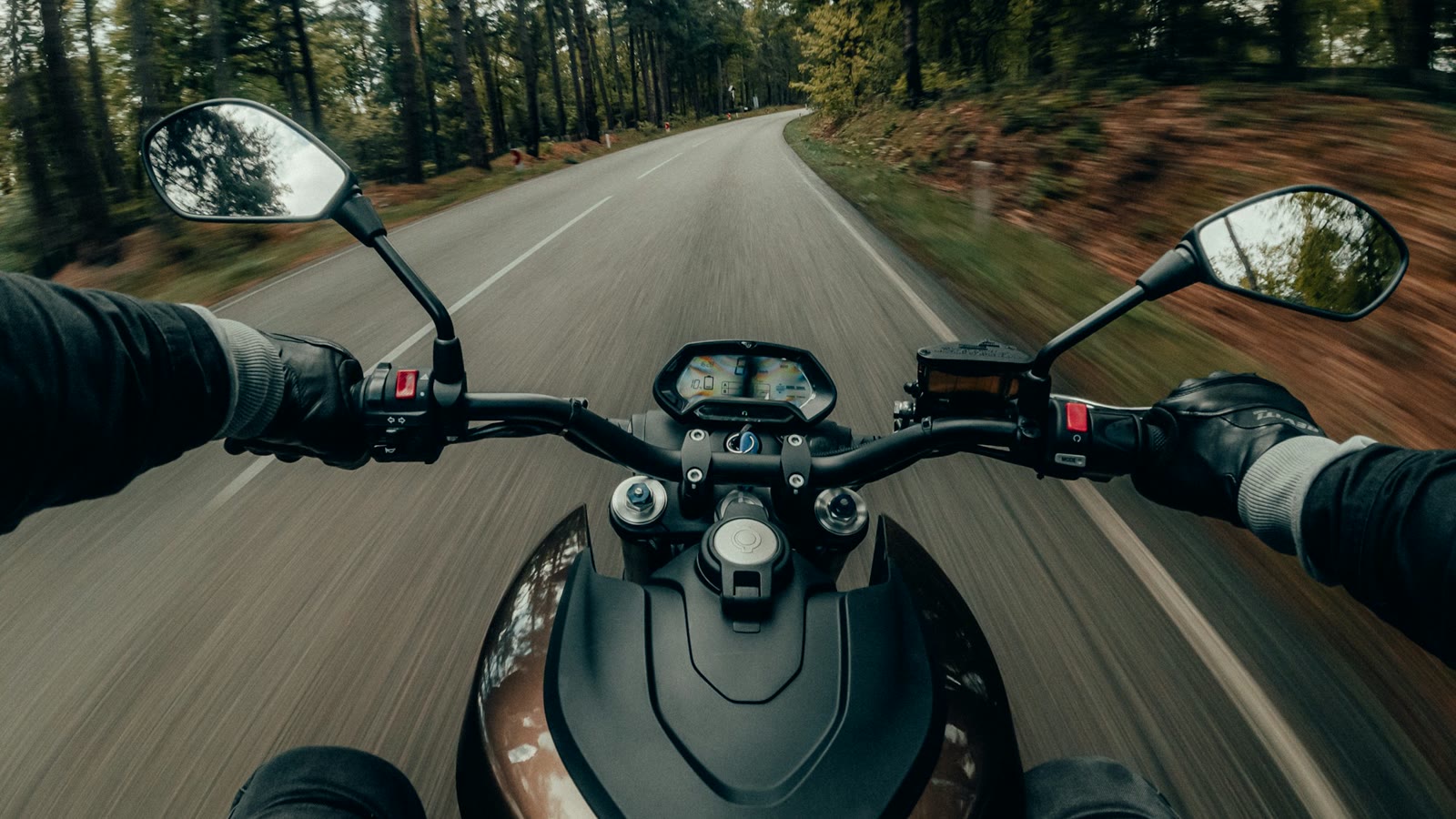
Possible in a car, so why is it so hard on a motorcycle?
A car stands on its own four wheels. A motorcycle only stays balanced while it moves, and a large part of that balance comes from the rider. Leaning into a bend, shifting body weight, the small counter-pressure on the bars... The rider is part of the bike's dynamics.
That's why autonomous driving software written for cars can't simply be moved onto a motorcycle. There's another catch: in a car, sudden automatic braking pushes you into the seatbelt. On a motorcycle the same braking can throw the rider over the bars. Even when the machine makes the "right" call, it has to carry it out together with the rider's body.
Manufacturers have tried anyway. Honda showed its Riding Assist prototype at CES in 2017, a bike that keeps itself upright without gyroscopes. Yamaha's Motoroid concept and the later Motoroid 2 could move without a rider using gyroscopes and image-recognition AI. In 2018 BMW Motorrad turned an R 1200 GS into a test bike that set off, cornered and stopped on its own.
None of them went into production, and that was never the point. These projects showed that a bike can understand its own state and react to it. That know-how is now flowing somewhere else.
The real change: not replacing the rider, riding alongside
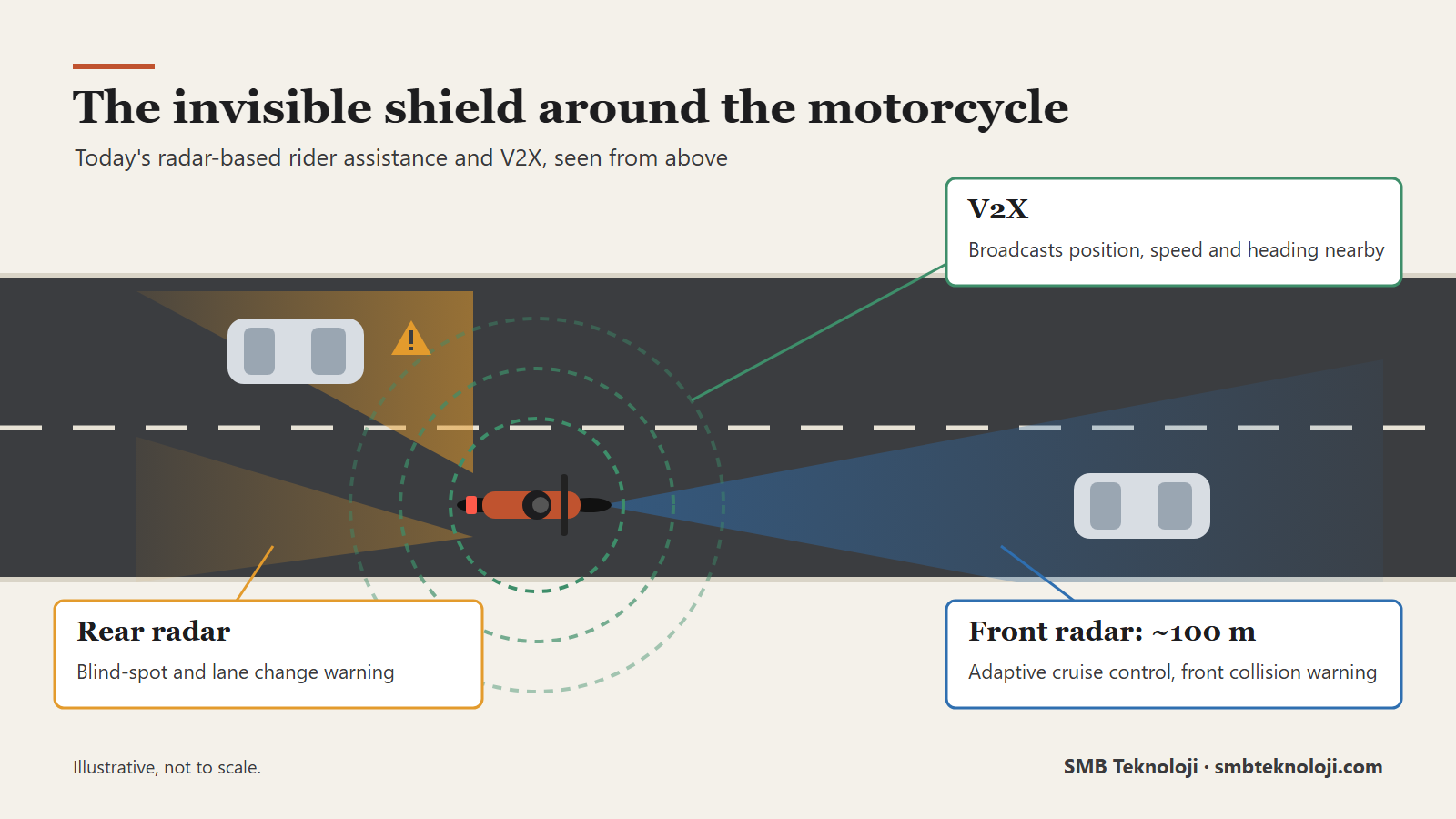
In 2021 the Ducati Multistrada V4 S became the first production motorcycle with adaptive cruise control (ACC) and blind-spot detection, using front and rear radar developed with Bosch. The front radar keeps the distance to the vehicle ahead; the rear one warns about cars you can't see in the mirrors and about traffic closing in fast from behind.
It was the result of years of engineering work Bosch has put into two-wheeler safety. Bosch brings its radar-based rider assistance together in one family under the name ARAS (Advanced Rider Assistance Systems): adaptive cruise control, forward collision warning and blind-spot detection. Bringing radar technology that matured in cars into the far tighter, more dynamic world of the motorcycle was a genuine turning point for the industry, and ARAS is today one of the most advanced examples of rider assistance on two wheels.
BMW's Riding Assistant, an option on the R 1300 GS, takes the idea a step further: adaptive cruise control, front collision warning and lane change warning. BMW's own support page is clear about what the system is designed for: the radar tracks moving vehicles ahead up to roughly 100 metres, and it is there to support the rider, not to replace them.
That approach matters. Today's systems don't take the rider out of the loop. They try to catch the moments the rider misses.
Alongside radar, other technologies have quietly become common:
- Cornering ABS and traction control: they measure the bike's lean angle and adjust braking and power to it. Bosch's system first went into series production on the 2014 KTM 1190 Adventure and is now common even in the mid-range. One of the clearest examples of the path Bosch has opened in motorcycle safety.
- Electronic airbag vests and jackets: sensors detect a crash and the airbag inflates within milliseconds.
- Automatic emergency call: some manufacturers offer systems that detect a serious fall and send the location to emergency services by themselves.
- Retrofit radar: radar-based blind-spot warning is no longer limited to flagship models; aftermarket radar kits are starting to appear.
When vehicles start talking to each other
We all know the classic motorcycle crash: a car turns left at a junction and doesn't see the oncoming bike. The driver's first words are usually the same: "I didn't see it."
This is where V2X, vehicle-to-everything communication, comes in. The Connected Motorcycle Consortium, founded by BMW Motorrad, Honda and Yamaha and later joined by manufacturers such as Ducati, KTM, Kawasaki, Suzuki and Triumph, is working on a common standard so that motorcycles broadcast their position, speed and heading to the vehicles around them. The consortium published its first basic specification in December 2020.
The idea is simple, but the effect is big: even if the driver doesn't see the bike, the car will know it's there and warn before the turn. In our view, this, much more than the self-riding motorcycle, is what will take two-wheeler safety to a level that sounds almost unbelievable today.
Visibility is still a basic safety measure
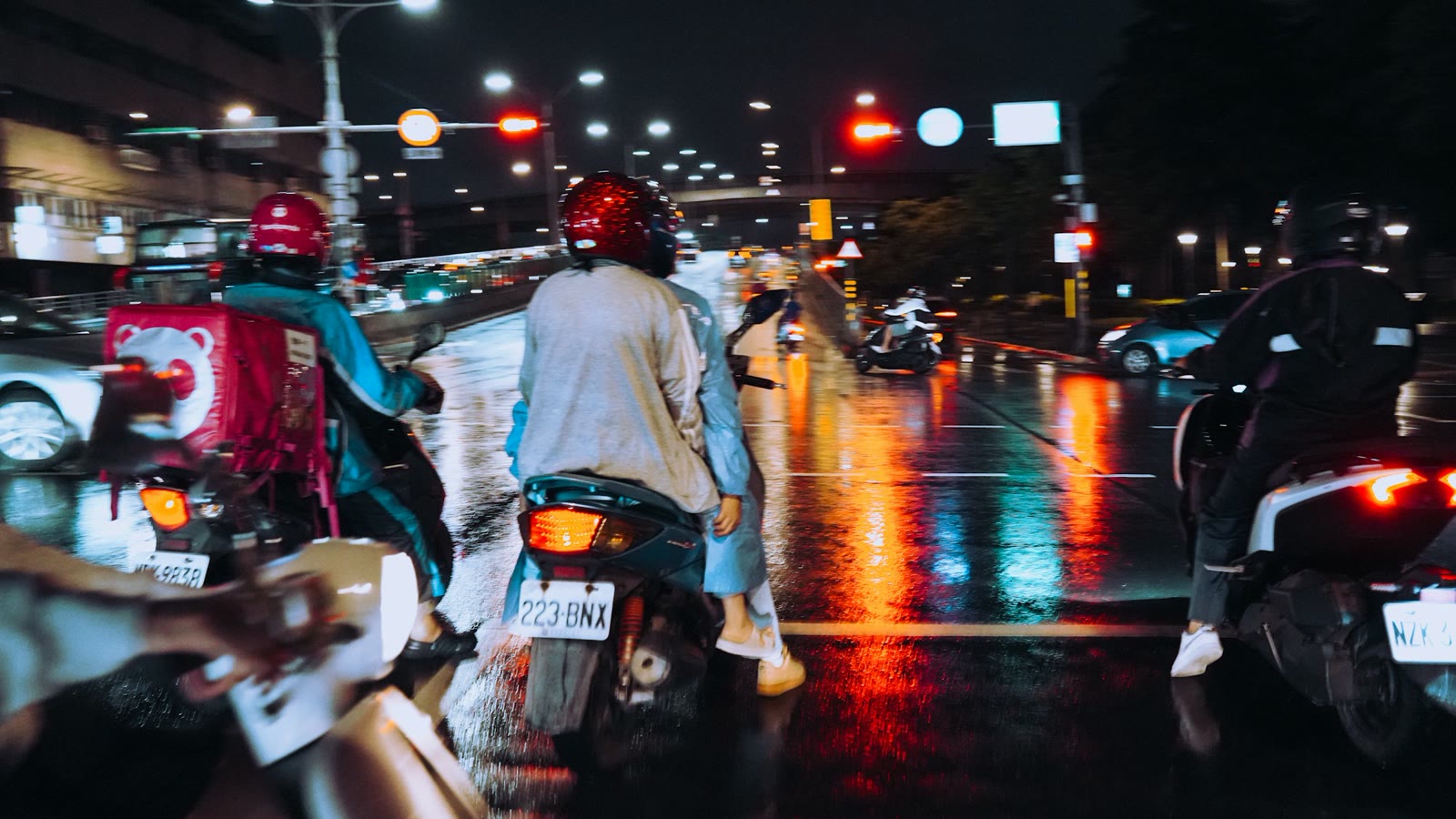
Even as radar and V2X spread, one basic stays the same: being seen. Brake light, indicators and reversing light are the only way the driver behind knows what the bike is about to do.
Sometimes those signals simply aren't visible. With a top case or a trailer fitted, the bike's own lights can be covered. Our MottoLight was built for exactly this: it re-displays the turn, brake and reverse signals hidden behind a top case or trailer, without touching the vehicle wiring. A small device, but for the driver behind it's the difference between "I can see what you're doing" and "I can't".
So what about the next 5–10 years?
Here's how we see it:
- A fully autonomous motorcycle isn't something we'll see in series production any time soon. Balance technology may come back, though, as a helper that stops the bike from tipping over at low speed.
- Radar and cameras will work together, combining the strengths of both sensors to give a fuller picture of the rider's surroundings.
- Prices will drop. Systems that are an option on top models today will reach the mid-range within a few years, just as they did in cars.
- V2X will be decisive. But that needs cars and road infrastructure to speak the same language, which is more a matter of standards and regulation than technology.
That's what we'll be watching most at EICMA 2026: whether radar reaches the mid-range, camera-based assistance, and how close vehicle-to-vehicle communication has come from the show stands to the road. We'll also be following closely the next steps from Bosch, which has been leading the way in this field for years.
The joy of riding comes from being in control. The job of future technology isn't to take that away, but to protect the rider at the moment they need it most.
At SMB Teknoloji we work on embedded systems, sensors and IoT. If you have an electronics idea or project for two-wheelers, get in touch.